My Healthy Pregnancy Must-haves
For first, second and third trimesters.
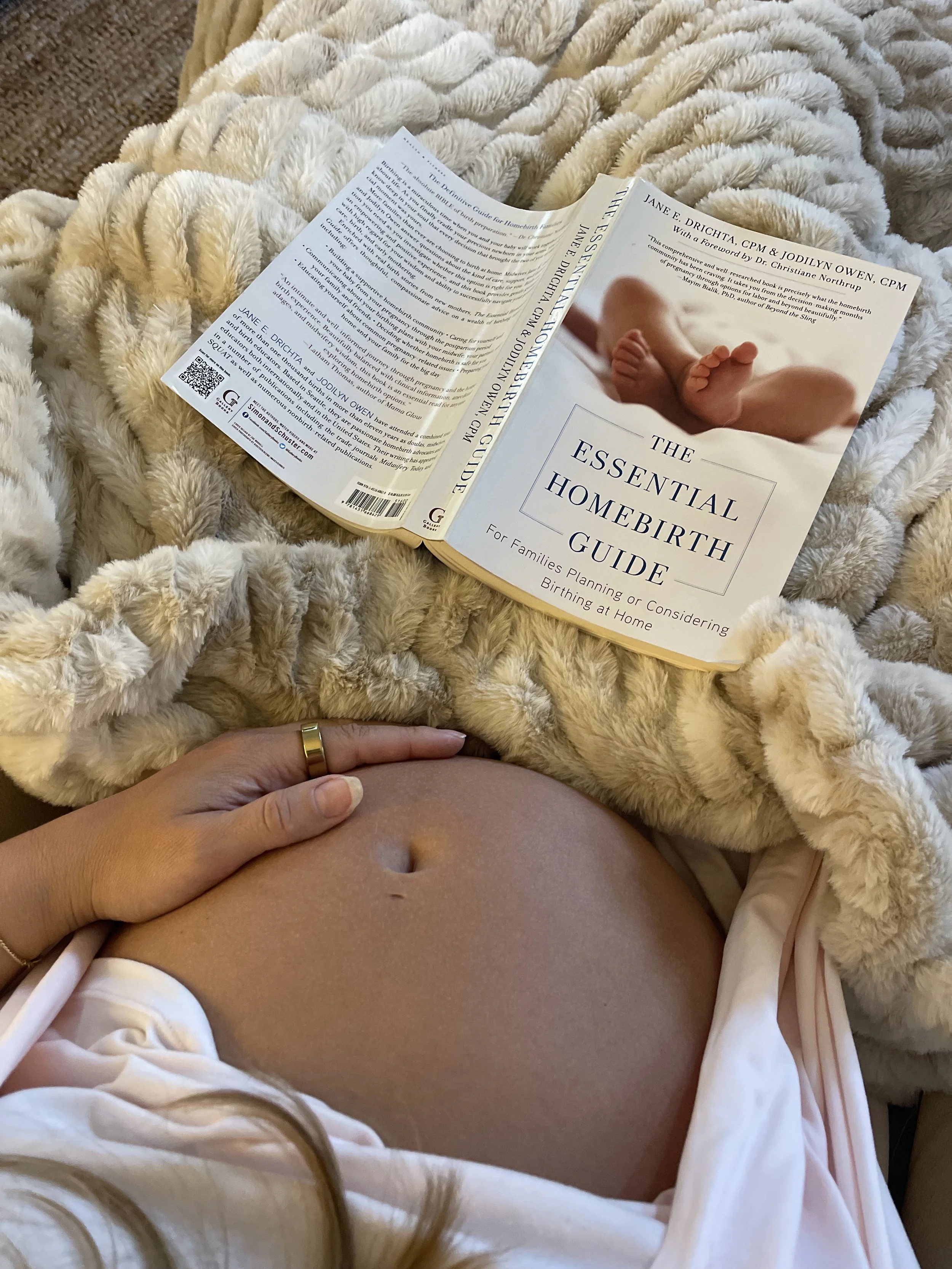
As I write this, I am 31 weeks pregnant with our little girl. Getting into the 30’s makes it all feel more real and close by — which I am all for. I am so looking forward to our birth.
I say “our birth” because while she will be birthed physically, I know I will be birthed as well — mentally, emotionally and spiritually. My identity will be completing the transformation from Maiden to Mother. One might argue that as soon as a woman is pregnant she is a Mother. While I agree with the sentiment of this, I firmly believe that the actual process of birth is a rite of passage for us as women. I’ve observed that birth is like a cauldron, spinning us into a different version of ourselves. We are forever changed once we are actually holding our babe in our arms. I believe every Mother who has gone through the birth process would agree with me.
I have envisioned that moment with our girl a thousand times.
As I reflect on my 31 weeks thus far, I wanted to share the tools and things that have enhanced my pregnancy, supported my being, and given me more confidence in some way on this with-child journey.
I have separated this list into first, second and third trimesters for ease, but some of these I have actually been using for months or years before even getting pregnant. This is, of course, not an exhaustive list.
Here we go!
First Trimester
Pregnancy Journal. Even if you do not consider yourself a “journaler,” this can be a very meaningful way to connect to your baby (and yourself) during such a special time.
The first time I found out I was pregnant in May 2024, we were on the tail end of a month long trip to Greece and Italy. It felt like a freakin fairytale, and we could not have been happier. I purchased a handmade journal the day after I took my first pregnancy test and started documenting my inner world on the flight home.
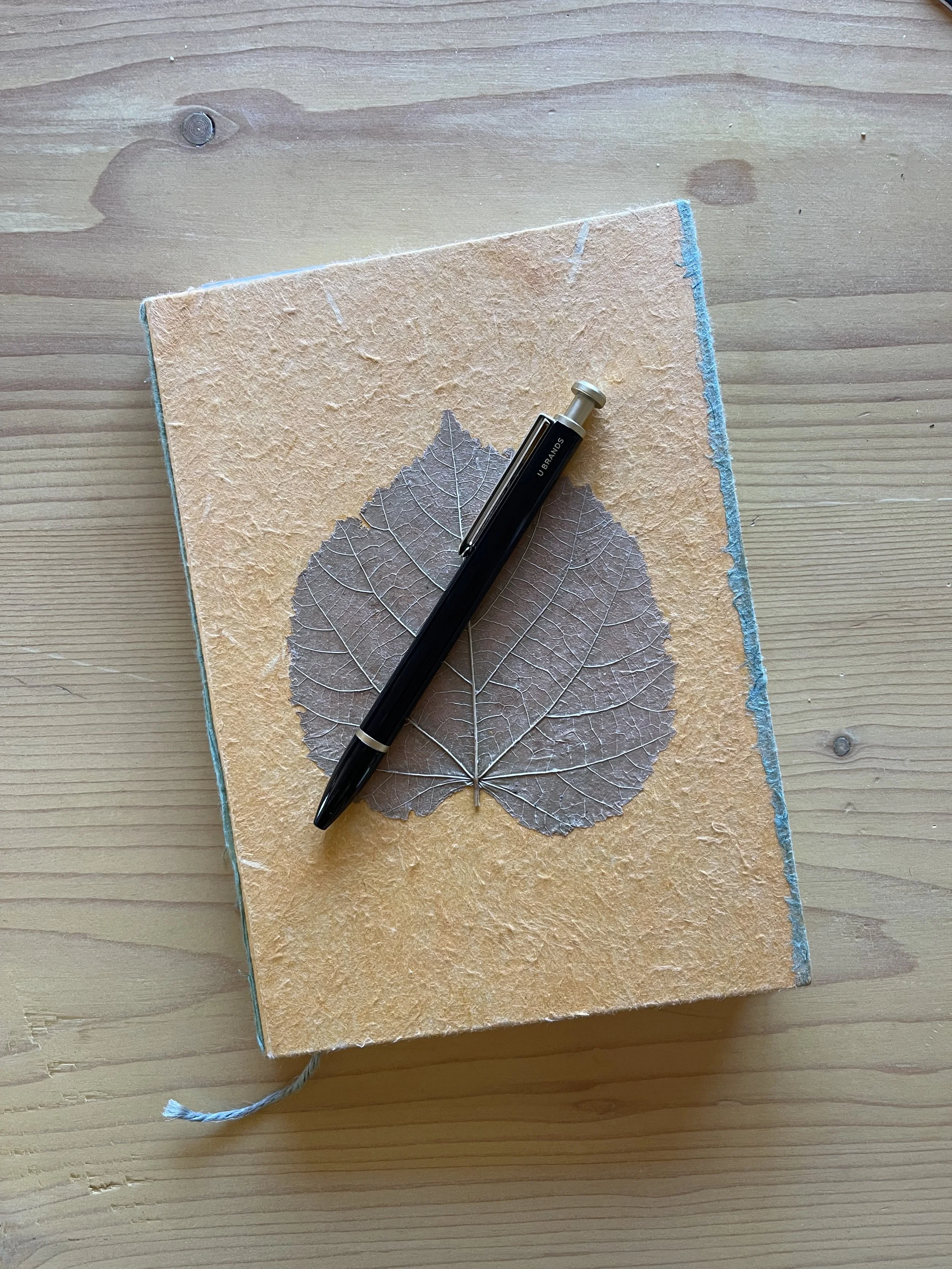
Made by an employee of the family hotel we stayed at in Italy. This leaf is directly off the property — where I found out I was pregnant.
I addressed the journal entries to the spirit of my unborn baby, not knowing that just a few weeks later (at 7 weeks) I’d experience my first pregnancy loss. Then another heart-wrenching loss of our baby boy, Dash, later that year (at 21 weeks). I did not write in the journal every day, or even every week, but I never completely stopped.
Prior to my losses, before miscarriage occupied any part of my mind, the original intention of this journal was to document my pregnancy journey (similar to a traditional pregnancy tracker) and share life wisdom with our future child they could someday read. After our losses, the intention changed and became twofold: to help me process and navigate the grief as well as share the lessons and wisdom coming to me along the way. I wanted our forever, future child to fully understand what it took to get her into our arms. The good, the ugly, the brutal and beautiful. It’s all a part of Life.
Once we have our girl with us, I will use the remaining pages of this journal as a quote book and core memory treasure chest, holding the wonderful and hilarious things I know she will say and do in her early years. Then I plan on giving the journal to her as a gift, once I feel she is developmentally ready for its contents.
For you: Adapt this however you like. You could even start earlier, like while trying to conceive. Or maybe you’re already in your second trimester — it’s not too late! No matter what stage you’re at, you’ll never regret being able to look back and read details about this oh-so-special time. This is a gift for your future self, and maybe your future child, if you like.
High Quality Prenatal. This is one of those things I started WELL before even trying to conceive. Newsflash: getting and staying pregnant takes a LOT of energy and resources from your body. It’s a freakin marathon. You wanna make sure you have what you need to build a whole-ass human (and placenta).
Prenatal vitamins have been around since the 1940’s, and there are now 400+ different brands of prenatals sold in the U.S. Depending on who you follow on Instagram, you may or may not think you need a prenatal. Or your favorite influencer might say all she used was beef liver capsules and her baby is perfect. Even if you have “the perfect diet,” there is no denying that most of our food supply contains a fraction of the nutrients it did 100 years ago. So yes, food first, but also, are you getting everything you need in that food?
Ultimately, it’s up to you, but to me, there is no downside to taking a high quality prenatal vitamin. High Quality being the key descriptor here. There are a lot of diluted, fluffy brands out there with a fairy dusting of nutrients.
I use the Fig Wellness Prenatal Stack. I made the switch from my previous prenatal because of Fig’s whopping 900mg of choline per serving (amongst the other amazing, high-quality ingredients). More choline supports a healthier brain.
The founder and formulator of this brand is Dr. Natalie Underberg, pregnancy prep & fertility expert. She has helped countless struggling couples get pregnant naturally. If we were navigating suboptimal fertility, she would be who I’d work with first. Fig also has prenatal for men — because it takes TWO people to create a healthy baby. Why this isn’t common, I have no idea! Fertility and conception should not be solely a “woman’s thing” to figure out.
Provider You Align With. When it comes to birth, the provider you choose, in my mind, is right up there with the partner you choose. Feeling supported and confident in your birth preferences is invaluable.
We, personally, are working with a group of certified professional midwives (with thousands of births under their belt) at a beautiful free standing birth center, and I could not be happier with our decision. It feels like we are truly a team, and I have expended ZERO units of energy feeling defensive of my decisions in this process.
Whether you choose a conventional OB, nurse midwife or professional midwife, sometimes it’s hard to know exactly what you’re looking for in a provider. In this case, it’s a helpful exercise to narrow down what you don’t want first.
For me, I don’t want a provider who:
-Makes me feel silly, dumb or talks down to me
-Treats me like a burden for asking questions
-Forces vaccination in order to be their patient
-Isn’t open to talking through various options
-Does not treat me like the ultimate decision maker
-Does not respect my wishes and preferences
-Pushes me to defend every decision I feel strongly about
-Does not offer true informed consent — risks, benefits & alternatives
Now create your own list, then just reverse each statement to the positive to find a provider you are aligned with. So ”Treats me like a burden for asking questions” becomes “Willingly takes the time to answer my questions in full.” Now you have an exact check list on how you want to feel when you interview providers — use it!
I would also add to this provider conversation, please please please consider hiring a doula. And I don’t mean your husband. I mean a professional doula. Just look up the stats behind doula work — women who have a professional doula are significantly less likely to:
have a cesarean section
tear
have unwanted interventions
And more likely to:
successfully breastfeed sooner
feel empowered by birth
have an unmedicated birth
Their work is INVALUABLE. I believe it’s so invaluable that I have a doula and TWO back up doulas, just in case. I want my husband and I to feel fully supported in this birth experience.
8 Sheep Organics True Belly Serum. Listen, I know there are more significant things in pregnancy to worry about than stretch marks. I’m not going to freak out if a couple pop up, but if I can avoid them, why wouldn’t I?
I have applied this serum twice a day every day RELIGIOUSLY even before I truly popped. After my morning shower and before bed, as well as any time my belly skin looks or feels dry AT ALL. I apply to belly, thighs and hips.

Look Ma, no stretch marks!
This serum is different than other stretch mark products because it contains Centella Asiatica and triple weighted Hyaluronic Acid, which together, penetrate into the deeper layers of the skin. It’s odorless, non-greasy and one bottle lasts me months.
So far, no stretch marks, and my belly is tracking right on size, BTW. I’m not one of those pregnant women with a teeeeeny tiny belly. And I know I’m only one person, but last time I posted about this on my Instagram, I had countless people respond directly and say it also worked wonders for them.
Solid Dental Health. One thing you may or may not have heard is that pregnant women are more susceptible to gingivitis (gum inflammation) and decay (cavities). How do you know? This may show up as painful gums that bleed very easily when you brush, floss or eat. Or bad breath that doesn’t really get better with brushing.
But this isn’t just an issue for mama. Excess inflammation and oral bacteria can significantly affect our babies too. Things like placental health, fetal growth signaling, increased risk of preterm birth or low birth weight to name a few.
You can blame this on increased blood volume or pregnancy hormones, which are totally valid…but not a complete picture. Spoiler: For a healthy mouth in pregnancy, YOU MUST KEEP PLAQUE OFF YOUR TEETH.
As a dental hygienist, I treated tons of pregnant women. Because of the increased risk of gingivitis and decay, we always recommend seeing these mamas more frequently for preventive dental cleanings. The women whose teeth and gums were the healthiest, had very meticulous home care. Meaning, they were pretty religious about keeping their teeth plaque-free.
I have a very in depth and comprehensive dental blog you can read here if you like, but I can simplify it too:
-Brush with an electric toothbrush (like Sonicare) 2-3x / day
-Floss daily (do not use Glide type flosses)
-Use toothpastes to keep your teeth mineralized & strong
For toothpaste, I like Superteeth dental products. (discount: MEDICIN)
For floss I like, Burst Oral Care (discount: MEDICIN) or Superteeth floss. You need something with a little texture and grit. Never use Glide.
Electrolytes. Staying hydrated is critical in pregnancy, for SO many different reasons. But hydration is much more than just guzzling a gallon of water. Paradoxically, guzzling water alone can actually bite us in the hydration butt!
When I’m not pregnant, I use electrolytes on days when I lift very heavy or go on a particular taxing or long hike. The average inactive person or non-athlete probably doesn’t need a whole dose of electrolytes every day.
But in pregnancy…Have I mentioned that pregnancy takes a toll on the body? This is an athletic event y’all! And electrolytes are important in every trimester.
1st Tri: Replaces mineral losses & supports placenta attachment
2nd Tri: Supports volume expansion & circulation
3rd Tri: Supports uterine, muscle & nerve regulation
When we take in extra electrolytes in pregnancy we are positively affecting: fluid balance, blood volume, nerve signaling, muscle contraction, and placental health to name a few!
I personally use Instant Hydration Electrolytes. They include French Grey sea salt in their formula, when most electrolyte brands use very cheap table salt! These are NOT the same. They also have a ton of great flavors, with no added sugar or weird stuff.
You can use the discount code MEDICIN for 30% off your first order!
Second Trimester
Prunes. Pregnancy constipation is real. Your high levels of Progesterone are telling your bodily functions to slowwww down, including your bowels. Find some organic pitted prunes and have like 4-5 per day and thank me later.
Mental & Physical Prep. I’m not a person who “wings it” in almost anything I do, and pregnancy has been no different. If you ARE a free spirit who likes to move through life in a mostly spontaneous way — I love that for you — except in birth.
Pregnancy is an unpredictable journey, and birth is an event that will likely be the most (or close to the top) profound and significant of your life. Both physically and mentally. This deserves some thoughtfulness and respect, in my opinion.
Also, the more you educate/prepare yourself for this magical event (along with finding an aligned provider), the less likely you are to have interventions that you are not aligned with, or be pushed into something you don’t feel good about. A.K.A. “birth trauma.”
For physical prep, I mean staying active throughout pregnancy AND understanding the mechanics of your abdomen and pelvic floor. I move my body every day in some combination of hiking, walking, resistance training, yoga, hip opening mobility…and in all of it I’m focusing on my breath and connection to my pelvic floor. Both activation and relaxation.
And, no, it’s not just about doing tons of kegels. Many women don’t need any more tightening and toning of the pelvic floor— they actually need to learn how to relax it. When you know how to fully relax your pelvic floor, your baby will have an easier time moving through this area of your body during brith. Not to mention, you’ll be less likely to have urine leaks or prolapse later on.
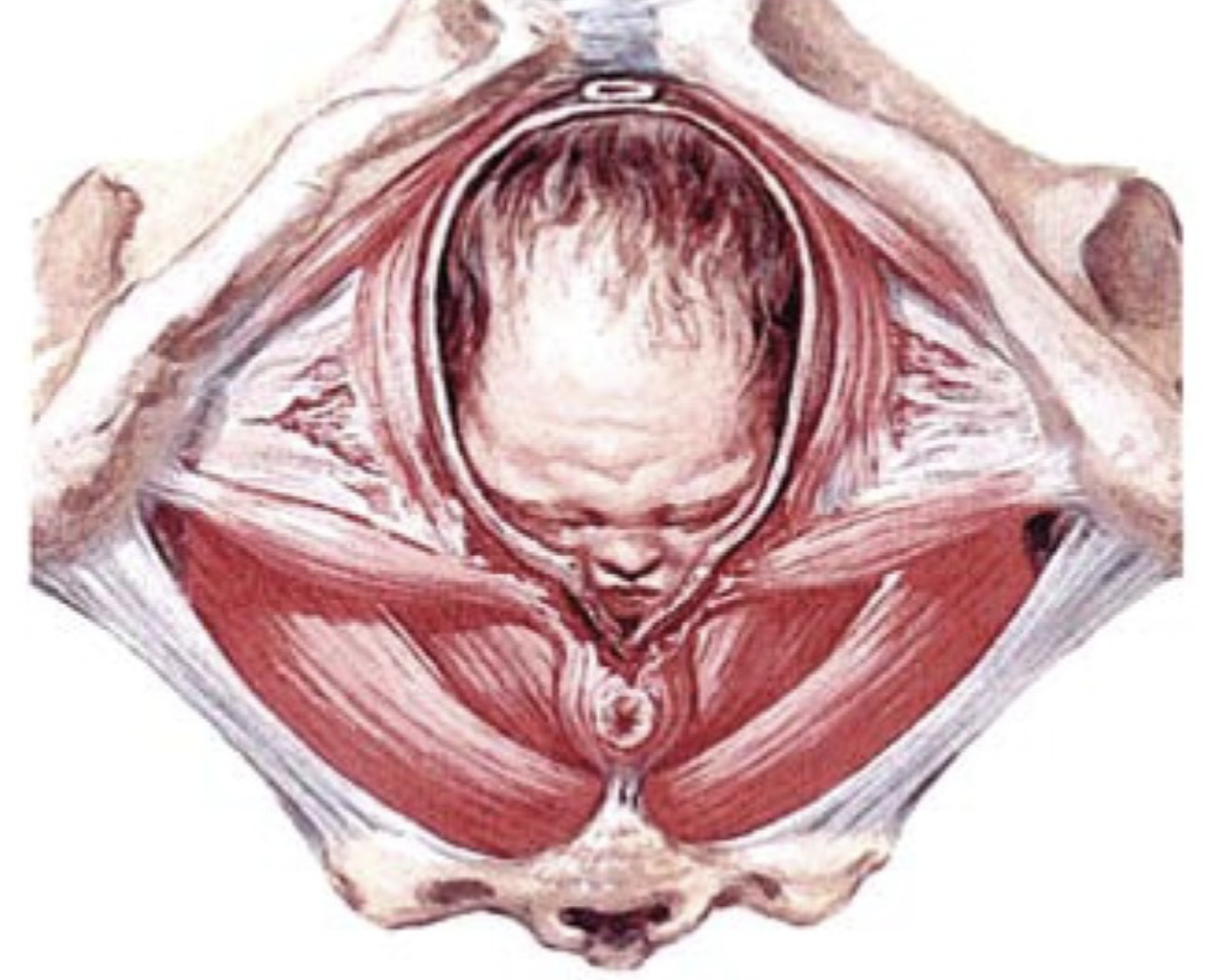
The reddish bands of muscle is your pelvic floor — and they basically need to relax and get out of the way for your baby to come through.
Here are some physical prep resources I have found valuable:
Cynthia Spenla - A Chek trained professional who specializes in female fitness, particularly prenatal and postpartum women. She’s a personal friend of mine and has taught me some invaluable tools on how to connect to my breath and pelvic floor in every exercise I engage in. She recently had a baby of her own and is intentionally prioritizing her baby girl, but still has online offerings available on her website linked above. Even if you don’t work with her directly, following her on IG (@cynthiaspenla) and watching her content could teach you a lot!
Move Like a Motha - Anna McClellan is a pregnancy and postpartum trainer who focuses on connecting to your breath, core and pelvic floor. She has several online programs and would be best for someone who is more experienced with resistance training. Her programs will likely be too much for the complete beginner. I went through one of her programs in my second trimester and really liked it, although some of the workouts were a little long in my opinion. I just adapted the length in this case.
Erica Wald - A prenatal and postpartum fitness coach who specializes in the core connection, pelvic floor and prenatal mobility for less pregnancy pain and smoother labor. She has an easy to use app with tons of different programs, including week by week pregnancy safe workouts, which I am doing currently. These workouts would be suitable for beginner to advanced individuals.
Pregnancy & Postpartum TV - This is a helpful YouTube channel that can guide you in breath and connection to your pelvic floor. She has a bunch of prenatal yoga videos that I like too.
Spinning Babies - We were blessed to take this course through our birthing center and I can confidently say, this is a class EVERY single pregnant woman (and her partner!) should take. Giving birth isn’t just about YOU pushing your baby out — you two are a TEAM. SB teaches the cardinal movements that your baby has to do in order to come through the birth canal in the optimal way, and how to best prime your body, ligaments and muscles to help your baby do this. SB reduces your rate of Cesarean by up to 48%. There are both online and in-person options.
For mental prep, I recommend the KG Hypnobirthing Course. The term hypnobirth sounds pretty woo-woo, but the science behind it is undeniable:
When you learn how to use your mind to fully relax your body, letting go of fear and tension, you naturally release more of the chemical messengers needed to progress labor, like oxytocin. When you hold on to fear and tension, your body creates more adrenaline and other stress hormones that can stall labor and cause you to experience more pain in birth.
The KG Hypnobirthing Course is extremely affordable and worth every penny in my opinion. However, you MUST practice regularly for it to be effective.
Bump-Friendly Staples. This baby girl POPPED at like 11 weeks! As my bump emerged and has grown straight out, finding simple, cute and flattering outfits has become the proverbial “needle in the haystack” and the finds are worth their weight in gold!
Here are a few staples that I’d go back and buy all over again.
Mōmanda Jumpsuit: This little number is at the top of my clothing totem pole right now. You could wear to the gym with sneakers, running errands, or dress it up with a nice jacket and booties and go to dinner. The material has a very nice stretch to it that will last me throughout my whole pregnancy. I got a Medium, and from what I can tell it’s true to size.
Everything Dress: One of those items I bought at the beginning of my second trimester, absolutely loved, and bought 3 more colors right away! Ha. I knew it would be one of those things that I’d wear multiple times per week. I call it my everything dress, because similar to the jumpsuit, you can dress it up for a nice event or running errands and anything in between. The material is super soft, like yoga pants, and has a nice structure to it, so you feel held in but not constricted. Built it bra - hallelujah - and comes in 7 different colors to choose from. I wear a Medium and it’ll get me through the end.
Vitality Fitness Wear: This is not a maternity brand, but has a great maternity line. If you are super active like I am, you need maternity items that hold things in! I’ve tried other fitness brands in pregnancy and I just keep coming back to Vitality. I have 3 of their maternity shorts, with matching scoop bras, 1 full legging pair, and the maternity trouser (like a flared legging). They truly have perfected the maternity fit! Fun Fact: the founder Taylor is pregnant and due the exact same time as me. :)
Bumpsuit Robe: I think every pregnant woman needs a splurge clothing item: this was mine. In my second trimester, my 10 year old, $30 target robe was barely covering my bump or my butt, so I went on the hunt for a luxurious, highly-rated maternity (pretty!) robe. The one I landed on is not cheap, but I knew I’d be wearing it every single morning and evening, well through pregnancy and into postpartum and breastfeeding, so it was worth it to me. It’s thin enough to not be overly warm, floor length but has cute slits up the side, and the fabric…is some of the softest I’ve ever felt. 10/10 for me!
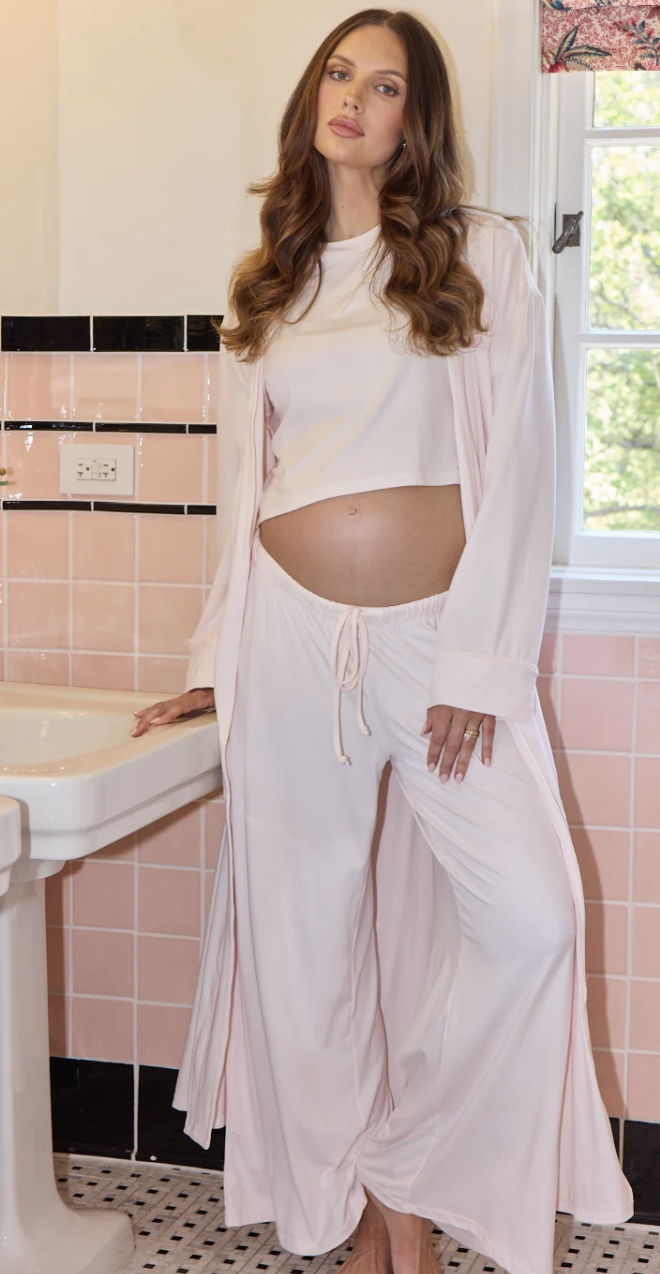
I got the Ice Pink and love it!
Books! Even if you’re not a big time reader, reading or listening to audiobooks is one of the best ways to get educated on various topics in pregnancy and birth. This section could get verrrry long if I described every single book, so I’m simply going to list the ones I’ve loved (in no particular order) and you can look into them further if the title strikes your fancy.
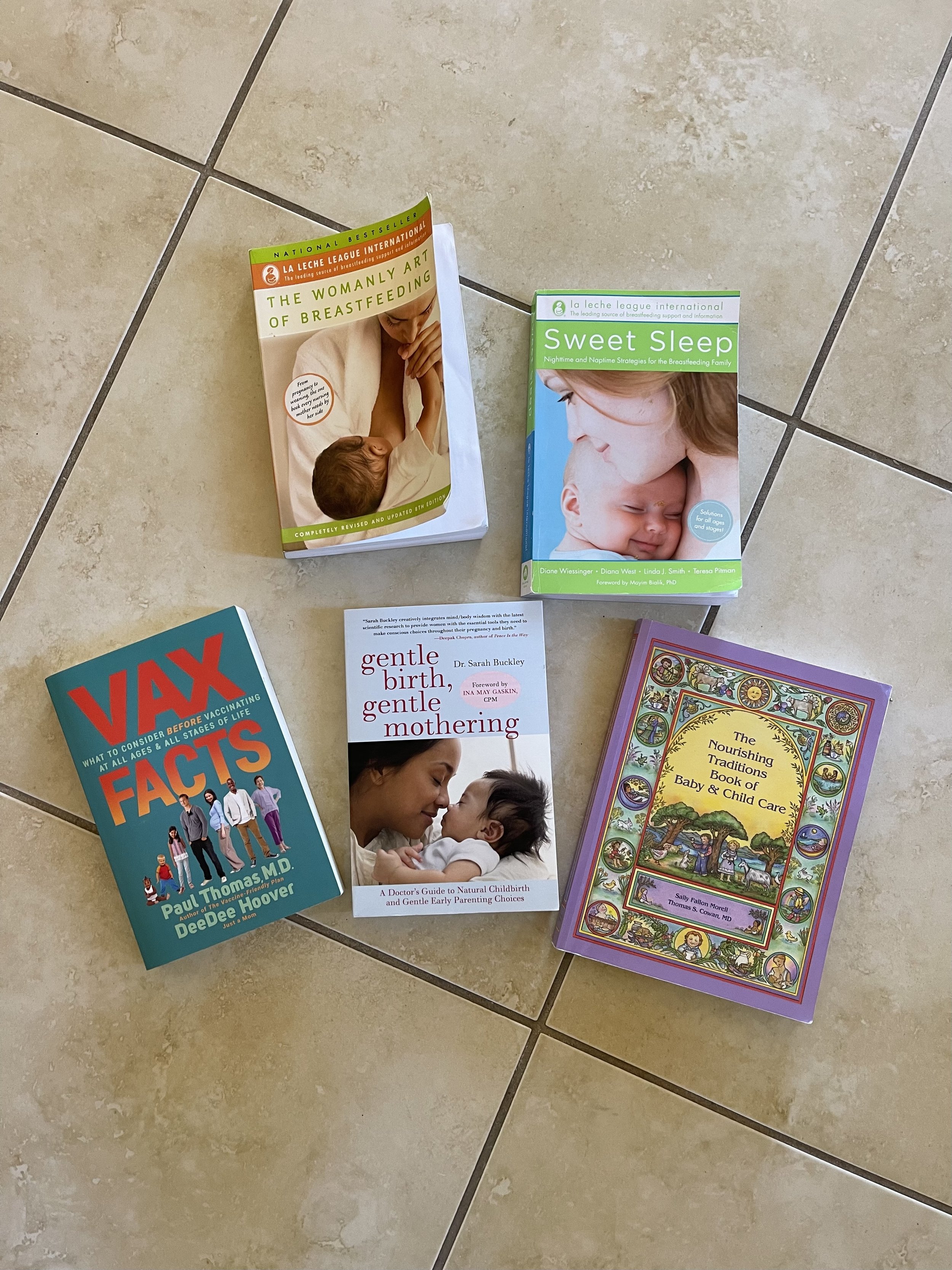
The Nourishing Book of Baby & Childcare by Dr. Tom Cowan & Sally Fallon Morell
Gentle Birth, Gentle Mothering by Dr. Sarah Buckley
Vax Facts by Dr. Paul Thomas
Sweet Sleep by various authors in La Leche League
The Womanly Art of Breastfeeding by various authors in La Leche League
Expecting Better by Emily Oster
Real Food For Pregnancy by Lily Nichols
Transformed by Birth by Britta Bushnell
Spiritual Midwifery by Ina May Gaskin
The Thinking Woman’s Guide to a Better Birth by Henci Goer
The Essential Homebirth Guide by Jane Drichta & Jodilyn Owen
Third Trimester
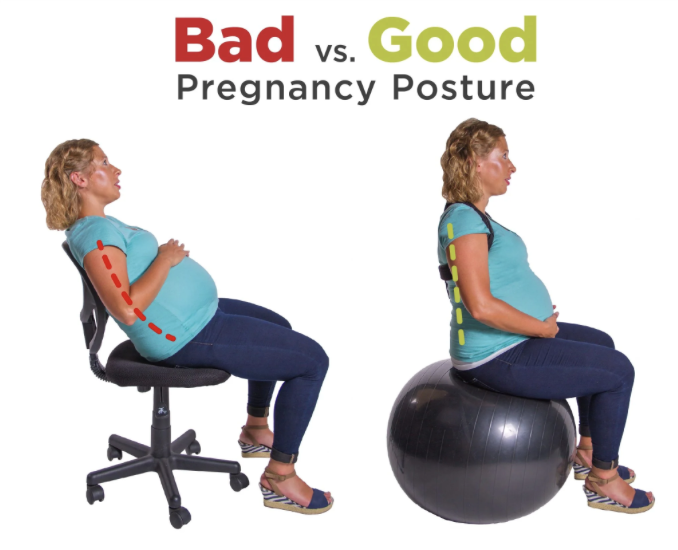
Lumbar Ball. Posture matters all the time, but especially when you’re pregnant! I know, I know…another thing to think about, but this is important. The way you sit and relax can very much affect your baby’s positioning later in pregnancy (breech or not), not to mention back and hip pain.
Ideally, you want to avoid “slouching” as much as possible. This puts your sacrum and the ligaments attached to it in a weird position, which can affect how your pelvis opens up (or doesn’t) during birth. Keeping your body symmetrical is important as well. Basically how you’d sit on a Swiss ball (as shown below) is ideal — you can’t really slouch and your feet need to be symmetrical for balance.
Source: BraceAbility
Although having a Swiss ball around is helpful, and I use mine daily, sometimes you need back support. A cheap and easy tool that my midwife recommended to keep me from slouching in a chair is a partially inflated pilates ball. And it really works! See below. The key is to find the “Goldilocks” inflation point for your body — it should feel very comfortable and relaxing on your spine.

I use this guy daily: while I work, as I relax in the evening and even in the car.
Lingo CGM. Around 28 weeks your provider is going to recommend a glucose test to evaluate your insulin sensitivity and hopefully ensure that you do not have gestational diabetes (GD).
Uncontrolled GD can have very serious consequences like excessive fetal growth (can lead to birth complications), and unhealthy blood sugar at birth, increasing the risk of Type 2 Diabetes in the child, and many more.
Considering these, I understand why providers stress the glucose screen…I just don’t agree with the most common way it’s performed. The pregnant woman consumes 50 grams of pure glucose with no fat, protein or fiber in 5 minutes or less. This is like guzzling a 16 ounce soda in 5 minutes.
There are now organic options like the “Fresh Test,” which do not contain any of the god-awful chemicals and dyes in the original Glucola drink. But still…50 grams of sugar felt like too much for me.
There are a lot of false positives. 15-25% of women fail, which means they will then be recommended to consume 100 grams of pure glucose and then another blood draw at fasting, 1, 2 and 3 hours.
I could throw up thinking about consuming 100 grams of sugar in one sitting. And if we know that consuming that much sugar is not ideal in pregnancy, whyyyy have we not found a better way to screen women?!
Well, actually they have…mainstream OBs just haven’t adapted yet.
Instead of consuming an ungodly amount of sugar to potentially get a false positive, I decided to wear the Lingo continuous glucose monitor for two weeks. Thankfully my midwife was in full support of this option and many of her other clients have done the same.
Ultimately it’s a more accurate reflection of my blood glucose fluctuations responding to my own lifestyle. I NEVER consume 50+ grams of sugar in one sitting. And there are no false positives with a CGM because the data is gathered over two weeks and many different meals.
I learned that I have great blood glucose control (wasn’t worried), and I even got to see how my blood glucose responds to stress, exercise, etc., not just meals. It was super insightful!
The Lingo CGM is very easy to apply, and stayed in place (on the back of my arm) through sweat, showers, and rolling around in bed. The accompanying app was easy to interact with as well. I’d recommend the Lingo because it offers a two week subscription for $49, which is what I needed. Most other CGMs require a month minimum subscription.
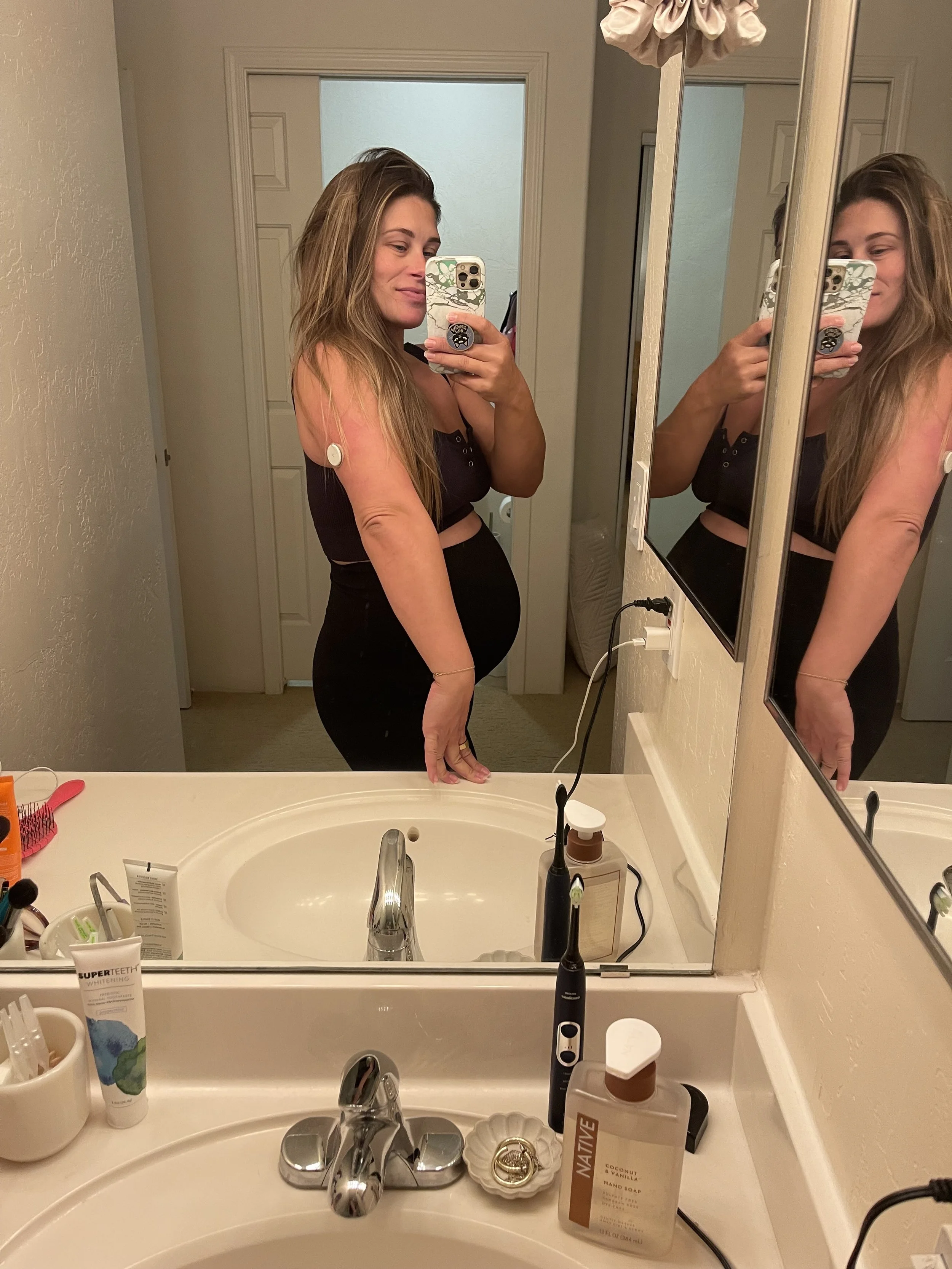
I learned so much with my Lingo CGM! I’d choose it all over again.
You may be thinking to yourself, “I really want to use a CGM instead, but I don’t know if my provider will LET me.”
Here’s the thing to remember: Your provider works for YOU. You are paying this person a large sum of money to provide you care. You can refuse any service, including the Glucola screen. You just need to be confident in your decision.
You can simply say, “Instead of the Glucola screen, I will be using a continuous glucose monitor for two weeks and sharing my results with you. If you like, I’m happy to share my reasoning.” You are not ASKING their permission; you are kindly informing.
Breastfeeding Education. I’ve always planned on breastfeeding. And a year ago, I thought the gist of it was “put the nipple in the baby’s mouth and they suck.” What’s so hard about that? Why do so many new moms say that breastfeeding was the most difficult part of the newborn days? It seems pretty straightforward. (I was not being judgmental; I was genuinely curious why so many mom’s struggle)
Well, after about 4 hrs of dedicated live breastfeeding education from my midwife and childbirth classes along with reading a very large breastfeeding book (The Womanly Art of Breastfeeding), I have learned that there is much more nuance to this beautiful act.
The lightbulb went on multiple times in our classes. I saw that minor changes in your positioning, or how much of your breast goes into the baby’s mouth, can be the difference maker for a full, happy baby, healthy nipples, and an accurate milk supply.
As I write this, I have yet to go through my breastfeeding journey, so I am not about to educate you on something I’ve only witnessed and learned about through demonstrations. However, I will say that if you plan on breastfeeding, I HIGHLY recommend getting some hands-on education prior to birth. Yes, the hospitals have rotating lactation consultants, but how much more successful will you be if you have the positioning and a few simple (not intuitive) pointers in your brain ahead of time?
Okay, I’m going to share ONE pointer I’ve learned just to make my point.
For your baby to get an ideal latch, she needs to open wide and catch much of your areola in her little mouth, not just the nipple. She’ll get more milk and it’ll be much more comfortable on your nips if they are being compressed at her soft palate, rather than her hard palate. So to encourage this wide mouth, hold your breast in your hand and aim your nipple at her nose (graze it even) instead of directly into her mouth. This will make her arch her back more, put her head back a bit to open wide. As soon as she opens wide over your breast, you quickly bring her even closer to you, hugging her in tight, solid latch in place.
“Nose to nipple” is not intuitive! I can’t say I’d ever think to do that had I not had that dedicated breastfeeding education.
Even with all the education and tips ahead of time, there may still be hurdles to overcome. That’s okay! I’m determined, and I’ve set myself up with good support.
A Supportive, Engaged Partner. I am beyond blessed to have a partner who cares deeply about my experience, is quick to offer help, is tuned into my cues, who makes me feel beautiful when I feel big and puffy, who massages my tired body without asking, is aligned in every birth decision and trusts that I am doing my absolute best for our little girl. He’s at every appointment and birth class right alongside me.

I simply could not ask for a better pregnancy partner.
Right up there with an aligned provider is an aligned partner. I realize that you can’t just go out to the partner store and grab the ideal one for you — who you’re with is who you’re with and none of us are perfect.
However, the conversations you have and ways you ask for help and/or support are critical in this sensitive time. Do not expect him to read your mind — that is cruel. Instead, set him up for success by lovingly making your requests, preferences and expectations clear.
Don’t demand, request.
Example:
(Bad) “My back is killing me and you’re just sitting on the couch. Do you ever even think to give me a massage?”
(Good) “Hey babe, my back is really tight. Could you rub it for a few minutes? I’d be so grateful.” (Then thank him after with a nice kiss)
Another one:
(Bad) “I’m doing a home birth whether you want to or not. This is my body, I’m making the final call.”
(Good) “I know that I will feel most comfortable and safe at home so I’d much prefer a home birth. I’ve done a lot of research and feel pretty strongly about it. I’d love to talk through your concerns if you have any and come up with a good Plan B so we’re both confident in our decision.”
Can you feel the difference?
Help your partner help you. Initiate the birth preferences conversation(s) early and often. Remember that you are doing the work of carrying and birthing the baby, but this is his child too. His voice matters. Even if you’ve done an immense amount more research than he has, be kind, talk through things with love, and take your concerns to your trusted provider if you need to.
Pregnancy is such a freakin miracle. Or more accurately, it’s a series of hundreds of daily miracles. Even the aches and pains, the changing body, the swollen feet…it’s all happening because you’re doing something VERY important. It is no small task to bake a human from scratch!
Be kind to yourself. Surround yourself with people who encourage and respect you. Protect your psyche. Take naps or slow down when your body requests it.
I hope my lengthy list of my pregnancy must-haves helps you in some way. If you have any questions or would like to share any thoughts please leave me a comment!
cheers + love.
big hug.